
AI, Automation and Smart Manufacturing: Where Should SMEs Actually Start?
Why SMEs Should Solve the Business Problem Before Investing in New Technology
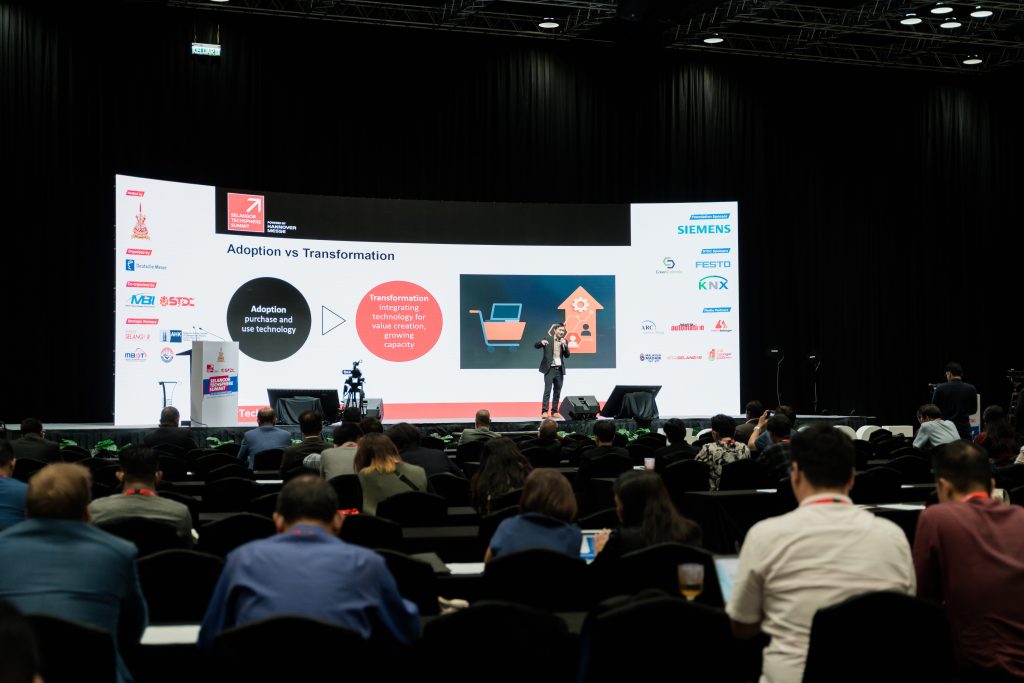
Industry leaders and businesses come together to explore how technology adoption can move beyond implementation towards real business transformation, growth and long-term value.
Technology investment does not have to begin with the latest solution. For SMEs, it may be more important to first understand the problem they are trying to solve.
Artificial intelligence, automation and smart manufacturing are increasingly becoming part of business conversations. For large manufacturers with dedicated technology teams and bigger investment budgets, exploring these technologies may be part of a wider transformation plan.
For an SME, the decision can be more complicated.
There is the cost of the technology itself, the time needed for implementation, the skills required to operate it and, importantly, whether the investment will actually improve the business.
This creates a practical question for many business owners. With so many technologies entering the market, where should they begin?
According to Natalie Green, Director Program and Partnerships (Industrial) at Hannover Fairs Asia Pacific, the starting point should not necessarily be the technology.
“The first step isn’t picking a technology. It’s identifying where your business is actually losing time, output or quality, and whether the cost of that problem justifies investment,” she said.
For a manufacturer, that problem could be production downtime, inconsistent quality, repetitive manual processes or an operation that is becoming increasingly difficult to scale.
Looking at the problem first changes the conversation. Instead of asking whether a company should invest in AI or automation, the question becomes whether a particular technology can solve an existing business issue and deliver measurable improvements.
This is especially relevant for SMEs where investment decisions often need to be more carefully considered.
The challenge, however, is not only deciding whether to invest. Business owners also need to understand what is available.
Researching different technologies, comparing vendors and understanding implementation requirements can take considerable time. Smaller businesses may not have a dedicated team to evaluate every option.
Green said this is one reason industry platforms can be useful for SMEs, particularly when businesses can compare different solutions and speak directly to people with actual implementation experience.
The Selangor Techsphere Summit 2026, which takes place from 14 to 17 October at the Kuala Lumpur Convention Centre, will bring together manufacturers, technology providers, investors, policymakers, researchers and industry specialists.
Hosted by the Selangor State Government and delivered in collaboration with the Selangor Technical Skills Development Centre (STDC), the summit is powered by HANNOVER MESSE, one of the world’s leading industrial technology platforms.
For SMEs, having an international industrial network brought closer to home can also lower the barrier to exploring new technology.
Mike Nissen, Senior Commercial Director APAC at Hannover Fairs Asia Pacific, said very few Malaysian SMEs would realistically send a team to Hannover simply to research industrial technology.
Having technology companies and industry expertise available in Kuala Lumpur gives business owners a more accessible way to explore their options.
“An owner can walk the floor, see automation, robotics and AI tools demonstrated live, and ask blunt questions about cost, payback and implementation of the people who sell and support them here in Malaysia,” he said.
Those questions matter because technology adoption is not simply about what a system can do.
For a business owner, the real consideration is what it can do for the company.
Can it reduce downtime? Can it improve product consistency? Can it help a business produce more without increasing manpower at the same rate? Can it reduce energy consumption or make an operation easier to manage?
And once the technology is introduced, does the company have people who know how to use it?
This is where the conversation about industrial transformation becomes a conversation about talent as well.
Dr Harizal B. Hamid, Chief Executive Officer of STDC, said one of the biggest challenges today is not necessarily the absence of technical skills, but how quickly existing skills are becoming insufficient.
Many SME employees already have years of valuable operational knowledge. As businesses introduce automation, digital systems and AI, these employees may need additional competencies to work effectively with the new technology.
These could include industrial automation, PLC capabilities, data literacy, AI applications, mechatronics, equipment integration, predictive maintenance and digital manufacturing.
That does not mean every employee has to become an automation specialist.
If a company introduces an automated production cell, for example, selected employees may need to understand PLCs, sensors, troubleshooting and maintenance. Supervisors may instead need sufficient digital knowledge to understand production data and use it to make better operational decisions.
For SMEs, this makes skills development more focused and potentially more manageable.
Dr Harizal also believes companies do not have to transform everything at once.
A business could begin by identifying one area where technology may make a measurable difference, such as reducing downtime, improving product quality, increasing productivity, lowering energy consumption or improving traceability.
From there, the company can determine the technology required and identify which employees need additional training.
This approach may be particularly relevant at a time when AI has become one of the most talked-about areas of business investment.
There can be pressure to adopt new technology simply because competitors are doing it or because a particular solution is receiving attention. But what works for one company may not necessarily solve the problems faced by another.
For SMEs, transformation may therefore be less about chasing the newest technology and more about making better investment decisions.
It also means looking at technology and people together.
A company can purchase sophisticated equipment, but the investment may struggle to deliver its full value if employees are not prepared to operate, maintain or manage it effectively.
Dr Harizal said SMEs can consider modular training, micro-credentials and industry certification to develop specific competencies without taking employees away from the workplace for lengthy periods.
Employees should also be involved earlier in the transformation process so they understand why technology is being introduced, how their roles may change and what new skills they will need.
For business owners still deciding where AI, automation or smart manufacturing fits into their operations, the answer may not require a complete transformation plan from day one.
It could begin with one problem.
Solve it, measure the results and decide what comes next.
“Start small, solve a real problem, train the right people, measure the improvement and then scale,” Dr Harizal said.
The Selangor Techsphere Summit 2026 will be held from 14 to 17 October at the Kuala Lumpur Convention Centre. The four-day programme will cover AI and the digital economy, semiconductors and microelectronics, green technology and smart automation, as well as governance, talent and TVET 4.0.
Registration is now open. For more information, do check out their website.


