
How AI Is Changing the Way Runners Find Their Race Photos
At Powerman Malaysia 2026, RaceTag Showed how Sports Technology Can Improve Both Race Operations and the Participant Experience
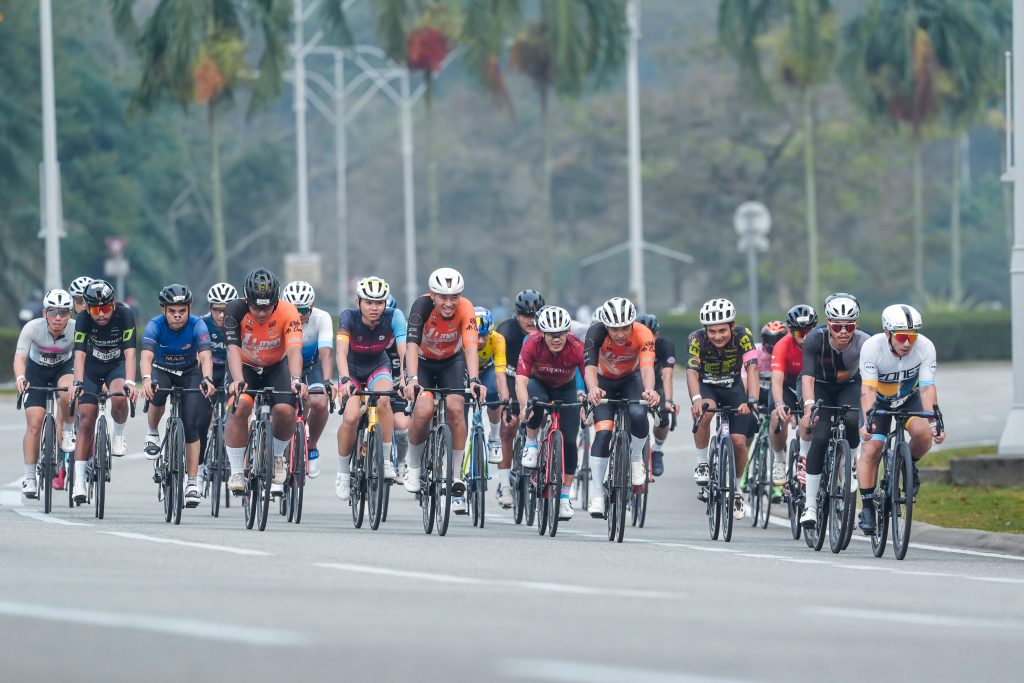
Cyclists take on the Powerman Malaysia 2026 course, where technology supported race operations, timing and the overall participant experience
Anyone who has taken part in a major running, cycling or endurance event will probably know the routine.
You finish the race, recover from the exhaustion and later start searching for your race photos. The problem is that there may be thousands of images to go through, and finding the few that actually feature you can take time.
At Powerman Malaysia 2026, CheckPointSpot® introduced a more practical way of doing this through RaceTag, an AI-powered photo solution that uses facial and race bib number recognition to help participants locate their photographs.
Instead of manually scrolling through large galleries, participants can use RaceTag to identify relevant photographs based on their face or visible bib number.
It may seem like a relatively simple use of artificial intelligence, but it highlights something increasingly important in the sporting event industry. Technology is no longer only about registration systems, timing chips and race results. It is also becoming part of the participant experience before, during and after an event.
For participants who took part in Powerman Malaysia 2026, their race photos can be searched through the RaceTag platform provided for the event.
Solving a familiar problem for participants
According to Benjamin Yeow, Group CEO of CheckPointSpot®, RaceTag was developed in response to a common issue faced by participants at large sporting events.
Thousands of photographs can be captured during a major race. While photographers may be positioned at different sections of the route, participants traditionally still need to search through large numbers of images to find themselves.
RaceTag uses AI to narrow down that process through facial and bib number recognition.
Benjamin said technology used at sporting events should not only make things easier behind the scenes. It should also improve the experience for the people taking part.
That distinction is worth noting.
For most runners, the technology behind an event is largely invisible when everything works properly. They register, collect their race packs, cross timing points and eventually receive their results.
But technology such as RaceTag brings part of that infrastructure directly into the participant’s post-race experience.
Race photos are more than photographs for many participants. They are personal records of the effort, training and experience that went into completing an event.
Making those memories easier to find is therefore another area where technology can add value.
Technology also has to respond when things change
RaceTag was only one part of CheckPointSpot®’s involvement in Powerman Malaysia 2026.
The sports technology company also supported the event’s two-day Race Entry Pack Collection, race timing and results management, working with the organising team throughout the planning and execution of the event.
The event also provided a reminder that sporting technology has to work under conditions that may change very quickly.
Haze conditions ahead of the race required organisers to review the race format, distances and routes. The revised arrangements were confirmed at approximately 2.00 PM on the day before the event, while race operations were scheduled to begin at 6.30 AM the following morning.
That left the operational teams with a relatively short period to prepare.
Following confirmation of the changes, CheckPointSpot® adjusted the race distances, categories and timing points within its systems. The team also reviewed results calculations, coordinated with the organisers and tested the revised setup before race morning.
It is an aspect of event technology that participants may rarely think about.
A timing system may be sophisticated, but when circumstances on the ground change, the people operating that technology still need to react quickly.
As Benjamin explained, technology and the team behind it have to respond together when an event changes at short notice. Despite the limited turnaround time, the revised race operations were successfully implemented.
Malaysian athletes take the top spots
The event also saw Malaysian athletes taking the top positions in both the men’s and women’s races.
Wee Hon Gavin Sim emerged as the men’s winner with a finishing time of 1:18:49, while Esther Joy Chen claimed the women’s title in 1:31:05.
Behind those results was a combination of race organisation, operational coordination and technology that helped keep the event running despite the changes required shortly before race day.
For CheckPointSpot®, Powerman Malaysia 2026 also demonstrated the broader role that sports technology can play.
The company specialises in technology solutions for endurance and mass participation sporting events, covering areas including online race registration, race pack collection, timing, AI-powered race verification, RaceTag AI race photography, race results and participant engagement technologies.
As sporting events become more digital, the expectations surrounding technology are also changing.
Accurate timing and results remain fundamental. But participants increasingly interact with technology throughout their race journey, from signing up and collecting their race packs to checking results and finding photographs afterwards.
Powerman Malaysia 2026 offered one example of how that journey is evolving.
For the participant, it could be as simple as finding that one photograph that captures the moment they crossed the finish line. For the technology team behind the event, however, making that experience possible involves considerably more happening behind the scenes.


